

CDC stops recommending hepatitis B vaccine for all US newborns. This means parents there now talk to doctors before giving the birth shot to low-risk babies. India has no such change; our rules stay the same.
Hepatitis B vaccines are injections that protect the liver from hepatitis B virus, which can spread through blood, body fluids, or from mother to baby at birth. They help the body make antibodies so that if the virus enters later, the immune system can fight it quickly and reduce the risk of serious problems like cirrhosis and liver cancer.
What Changed in the U.S?
America’s CDC stops recommending hepatitis B vaccine right after birth for every baby. This ends a 30-year rule from 1991. CDC head Jim O’Neill said, “We want parents to choose for babies with low risk.”
Now, only babies whose mums have hepatitis B or unknown test get it at birth. Others can wait till 2 months. Hepatitis B spreads through blood, semen, or close contact with infected people. Cases in the US dropped nearly 90% from 9.6 per 100,000 in 1982 to about 1 per 100,000 in 2018, thanks to vaccines.
But experts worry this change raises risks. Michaela Jackson from the Hepatitis B Foundation said, “This is going to lead to an increase in preventable infections among children.” Dr Emily Landon, an infectious diseases expert at the University of Chicago Medicine added, “This recommendation is ignoring the science.”

CDC Stops Recommending Hepatitis B Vaccine: What Does This Mean for India?
No change in India from “CDC stops recommending hepatitis B vaccine” news. We still follow our own national guidelines, which clearly say that every newborn should receive the hepatitis B vaccine at birth, regardless of the CDC decision in the US.
For Indian parents, this means your hospital birth plan does not change. The usual practice of giving the first hepatitis B shot within 24 hours of birth continues, because it protects babies from infection that can silently pass from mother to child and later damage the liver. Indian experts point out that our country still has a higher number of hepatitis B carriers and many mothers may not be tested during pregnancy, so skipping or delaying the birth dose could leave babies unprotected at the most vulnerable time.
So, while headlines say “CDC stops recommending hepatitis B vaccines for all newborns” in the US, Indian paediatric and public health bodies are telling families here a simple message: stick to the birth dose, complete the full schedule, and use this moment as a reminder to ask your doctor about your own and your child’s hepatitis B vaccination status.
- India has not changed its policy after the “CDC stops recommending hepatitis B vaccine” decision; universal birth dose is still advised.
- Newborns in India should get 0.5 ml hepatitis B vaccine as an intramuscular shot in the thigh within 24 hours of birth.
- Because hepatitis B is more common here and many mothers are not tested, experts strongly support keeping the birth dose.
When was hepatitis B vaccine introduced in India?
In India, the hepatitis B vaccine came into use in the 1990s, with local production starting around 1998 by companies like Bharat Biotech. It joined the National Immunisation Schedule in 2002-2005, with a birth dose pushed to stop mother-to-child spread.
India still gives the hepatitis B vaccine route and dose newborn as 0.5 ml intramuscular within 24 hours of birth. Coverage for birth dose lags at about 45% in some years, despite high hospital births.
- Birth dose: 10 mcg (0.5 ml) IM in thigh.
- Then at 6, 10, 14 weeks.
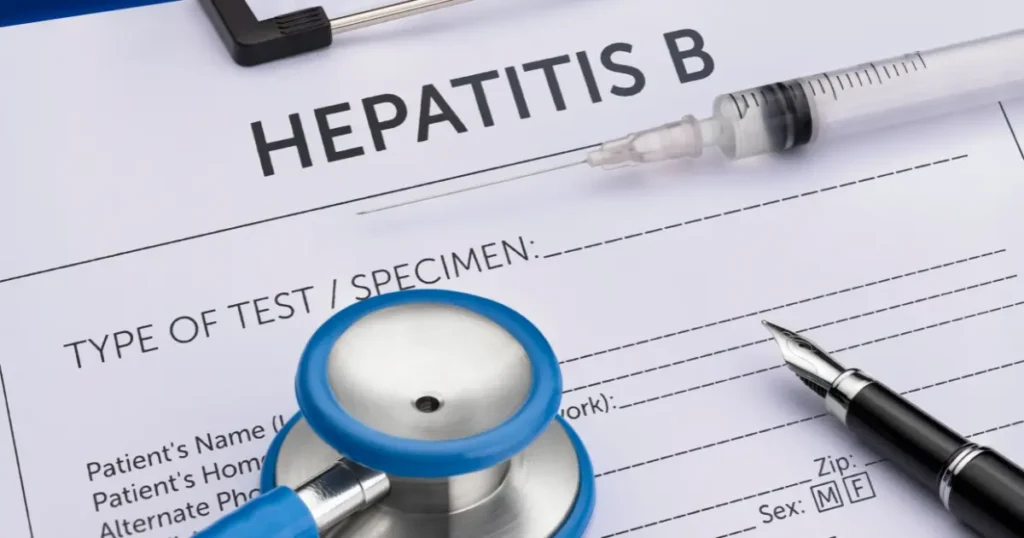
Hepatitis B Birth Dose Route: How Is It Injected?
The hepatitis b birth dose route is a deep intramuscular injection into the antero-lateral side of the mid-thigh for newborns. This spot works best for babies as it has enough muscle and avoids nerves or bones. Give 0.5 ml (10 mcg) within 24 hours of birth to stop mum-to-baby spread right away
Vaccine Schedules for Adults
The hepatitis b vaccine schedule for adults follows a three-dose plan: first dose, second after one month, third after six months. Hepatitis b vaccine dose for adults in ml is 1 ml (20 mcg) intramuscular for those over 20 years.
For unvaccinated adults in India, check with your doctor for the hepatitis b vaccine schedule for adults. Many clinics offer it, like Serum Institute products at 1 ml per dose.
Have you checked your hepatitis b vaccine in India status? High-risk groups like healthcare workers need it.
Drug Safety Physician Jobs for Freshers: A Complete Guide
How to Give Shot to New Baby?
Hepatitis b vaccine route and dose newborn: 0.5 ml jab deep into the muscle on the antero-lateral side of mid-thigh soon after birth. Then more at 6, 10, 14 weeks.
- Stops mom-to-baby spread.
- Only 45% babies get it now, needs to go up.
What About Shots for Grown-Ups?
Hepatitis b vaccine schedule for adults: 3 shots; day 1, after 1 month, after 6 months. Hepatitis b vaccine dose for adults in ml: 1 ml jab for over 20 years.
Nurses and travellers in India take this. Check if you got yours!
On A Final Note…
The CDC stops recommending hepatitis B vaccine universally sparks global talks, but India holds steady. Talk to your doctor about family risks and schedules.
- Test for hepatitis B first.
- Complete full doses for lasting protection.
- Track local updates on hepatitis b vaccine in India.
The CDC stops recommending hepatitis B vaccine does not affect India yet.
FAQs
Q: Why did CDC stop recommending hepatitis B vaccines at birth for every baby?
A: CDC stops recommending hepatitis B vaccine as routine right after birth to let parents choose for low-risk babies. Only high-risk get it now; others wait 2 months.
Q. Has India changed rules after CDC stops recommending hepatitis B vaccine?
A: No, India keeps hepatitis b vaccine in India as birth dose for all newborns. No changes announced.
Q. What is hepatitis b vaccine route and dose newborn?
A: Give 0.5 ml (10 mcg) deep into thigh muscle (antero-lateral mid-thigh) within 24 hours of birth.
Q. Which hepatitis is curable?
A: Hepatitis C is considered curable with new antiviral tablets, while hepatitis A usually clears on its own; hepatitis B is mostly controllable, not fully curable in chronic cases.
