

In medical billing, a copay is a fixed sum that patients pay upfront for authorized treatments such as doctor visits or medications, with insurance covering the remainder after any rules such as deductibles apply. This system splits costs between the patient and the insurer, lowering premiums but increasing personal expenses at the time of care.
In India, copay in medical billing is common in private health plans, accounting for 10-30% of bills and helping to keep policies affordable in the face of escalating hospital expenses.
In this article, we will look at the meaning of copay in medical billing, the distinction between copay and coinsurance, and the meaning of prepayment, co-insurance, and deductible.

What is Copay in Medical Billing? Detailed Meaning
Every patient trying to understand the working of medical insurance always ask, ‘What is copay in medical billing?’ Well, it is a cost-sharing tool where patients hand over a set fee each time they use services, printed right on their insurance card, and the provider collects it before billing the insurer for the balance.
This copay always stays fixed per service. For example, ₹300 for a GP visit or ₹100 for generic drugs, regardless of the total bill size. This keeps unwanted and sudden expenses at bay.
Providers benefit from copay because it brings immediate cash to cover basics like staff wages or supplies, reducing wait times for insurance payouts that can drag on for weeks in busy clinics.
Copay Meaning in Medical Billing: Everyday Examples
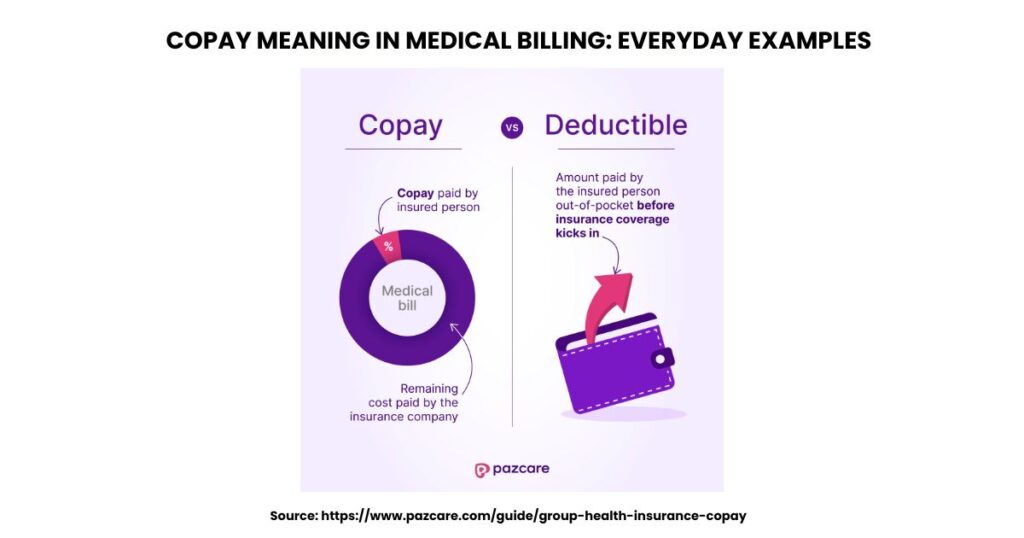
Copay meaning in medical billing shows up clearly in real visits: imagine a ₹1500 doctor bill with ₹250 copay – you pay ₹250 upfront; insurer pays ₹1250 after checks. For prescriptions, ₹10 for generics, ₹50 for brands – fixed and simple.
In Indian policies like those from Bajaj or Care, copay meaning in medical billing often ties to percentages (10-30%) on claims, so a ₹1 lakh hospital bill means ₹10,000-₹30,000 from you.
Examples:
- Primary care visit: ₹200-₹500 fixed
- Specialist: ₹500-₹1000
- Generic medicine: ₹50-₹100
- Emergency: ₹1000+ or 20%
Difference Between Copay and Coinsurance
The major distinction between copay and coinsurance is in how they are calculated; copay is a flat fee per service, whereas coinsurance is a percentage of the allowable bill after exclusions are met. In medical billing, copays are charged upfront for predictability, whereas coinsurance is charged later, fluctuating with bill size for larger claims like surgery.
| Features | Copay | Coinsurance |
| Amount | Fixed fee (e.g., ₹300) | Percentage (e.g., 20%) |
| When paid | At service (visit/pharmacy) | After deductible, on bill |
| Predictability | High for routine care | Varies with total cost |
| Example | ₹300 doctor visit | 20% of ₹50,000 surgery (₹10,000) |
What is Copay Coinsurance and Deductible?
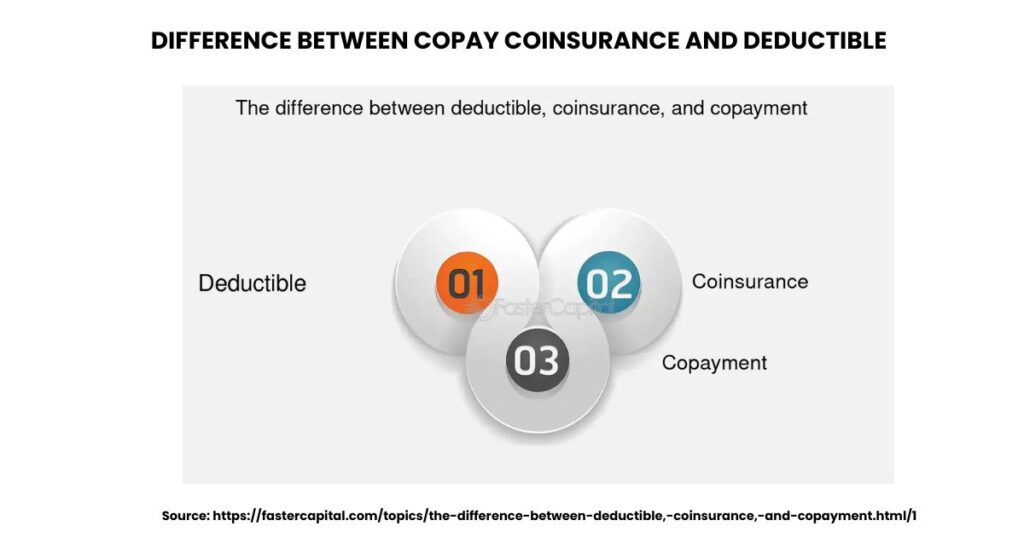
What is copay coinsurance and deductible covering the trio of out-of-pocket costs in most plans: deductible first (full amount you pay till met, e.g., ₹50,000 yearly), then copay for routine or coinsurance percentage on rest till out-of-pocket max.
Sequence in copay: Pay deductible fully, then copay on visits or coinsurance on hospitals; stops at max (e.g., ₹2 lakh). In India, senior plans often mix 10% copay post-₹25,000 deductible.
Pointers on what is copay coinsurance and deductible:
- Deductible: Yearly threshold before sharing starts
- Copay: Flat for small services
- Coinsurance: % on large bills post-deductible
- Max: Caps total yearly spend
Read more about deductibles in medical billing and understand how it differs from copay and coinsurance.
How Copay in Medical Billing Affects Providers and Patients?
For patients, copay in medical billing keeps routine care affordable but adds up for frequent visits, nudging policy shopping for low-copay options. Providers collect copays instantly, boosting front-desk cash but must explain politely to avoid walkouts.
In India, it cuts premiums 10-20%, suiting young families but burdening seniors with high usage.
Pros
- Lower premiums overall
- Predictable small payments
- Quick provider reimbursement
Cons
- Frequent visits rack up costs
- No cap on copays alone
- Confusion with other terms
On A Final Note…
Copay and coinsurance differ in their calculation methods. Copay is a flat price per treatment, while coinsurance is a percentage of the permissible bill after exclusions. In medical billing, copays are collected ahead for predictability, but coinsurance is payable later and varies with bill size for higher claims such as surgery.
What is copay in medical billing?
Fixed fee patients pay upfront for services; insurer covers rest.
Copay meaning in medical billing?
Set amount per visit/medicine, e.g., ₹300 doctor, printed on card.
Difference between copay and coinsurance?
Copay fixed; coinsurance % post-deductible on bills.
What is copay coinsurance and deductible?
Deductible first full pay, copay flat routine, coinsurance % large claims.
