
Hypertension in the young is no longer rare in India; school‑going children, teenagers and young adults are increasingly being diagnosed with high blood pressure, often without obvious symptoms. Early detection and treatment are important because damage to the heart, kidneys, eyes and brain can begin silently in childhood.
What Is Hypertension in the Young?
Hypertension in young people refers to high blood pressure diagnosed in children, teenagers and young adults, usually between 5 and 39 years of age. Studies from India show that about 5–6% of adolescents and 12–20% of young adults already have raised blood pressure, and many do not know about it.
One large Indian survey found that almost 14% of people aged 15–39 years had hypertension, and less than 20% of them were taking regular treatment. Among school‑going adolescents, pooled Indian data show a rising trend of hypertension in younger people and children, especially in urban areas.
“High blood pressure in youth is like a silent investment in future heart disease” – said Dr Arya Krishnan, cardiac surgeon at NHS UK.
Causes Of Hypertension in Children and Young Adults
When talking about hypertension in children and young adults, parents often ask, “Why is my child’s BP high at such a small age?” The causes of hypertension in children can be different from the reasons for high BP in young age adults, but modern lifestyle is a common thread.
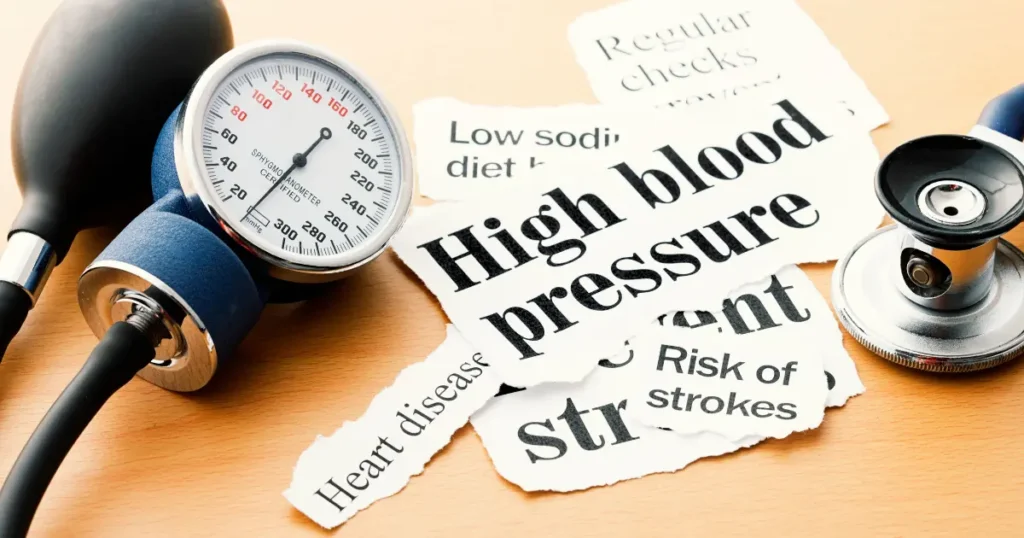
Major causes of hypertension in children
The causes of hypertension in children are broadly divided into:
Secondary causes (more common in children):
- Kidney diseases (chronic kidney disease, scarring, reflux nephropathy).
- Renovascular hypertension in children due to narrowing of the kidney blood vessels.
- Hormonal problems (thyroid disorders, adrenal gland tumours).
- Heart defects present from birth (coarctation of aorta).
Primary (essential) hypertension:
- More common in older children and teenagers with obesity, family history of hypertension, high salt intake and low physical activity.
The causes of hypertension in children are changing in India; as obesity and sedentary lifestyles rise, primary hypertension and lifestyle‑linked factors are becoming more frequent even in school‑going kids.
Reasons for high BP in young age (teens and 20s–30s)
Among adolescents and young adults, the reasons for high BP in young age are often related to habits and environment. Common reasons for high BP in young age include:
- Excess salt, packaged foods and frequent eating out.
- Obesity, especially around the waist, and lack of regular exercise.
- Stress, long screen time, poor sleep and exam or job‑related pressure.
- Smoking, alcohol use and sometimes use of gym supplements or steroids.
- Family history of hypertension, diabetes or early heart disease.
Many young adults with hypertension also have multiple risk factors together, like being overweight, sitting for long hours and having a strong family history.
“Your BP at 25 often reflects your lifestyle at 15”
Renovascular Hypertension in Children
Renovascular hypertension in children is a type of high blood pressure caused by narrowing or blockage in the arteries that supply the kidneys. It is one of the important causes of hypertension in children, especially when the BP is very high, appears suddenly or does not respond to usual medicines.
- Renovascular hypertension in children may be due to conditions like fibromuscular dysplasia or inflammation of blood vessels (vasculitis).
- Children with renovascular hypertension in children may present with headaches, poor growth, seizures or heart failure, but sometimes there are no clear symptoms.
In any child with severe hypertension, doctors think of renovascular hypertension in children and kidney‑related causes early, because special tests like Doppler ultrasound, CT angiography or MRI angiography may be needed.
How Is BP Measured? Pediatric Blood Pressure Chart Basics
Blood pressure (BP) in children is primarily measured using the auscultatory method, considered the gold standard, where a stethoscope detects Korotkoff sounds over the brachial artery after inflating a properly sized cuff on the upper arm. The systolic BP corresponds to the first Korotkoff sound (phase I), and diastolic to the disappearance of sounds (phase V), with the cuff deflated at 2-3 mmHg per second; oscillometric devices are common for screening but require auscultatory confirmation for hypertension diagnosis.
Parents often ask, “What is normal BP for my child?” This is where the concept of a pediatric blood pressure chart becomes important. Unlike adults, children’s BP depends on age, sex and height, so doctors use a pediatric blood pressure chart with percentile values instead of one single cut‑off.
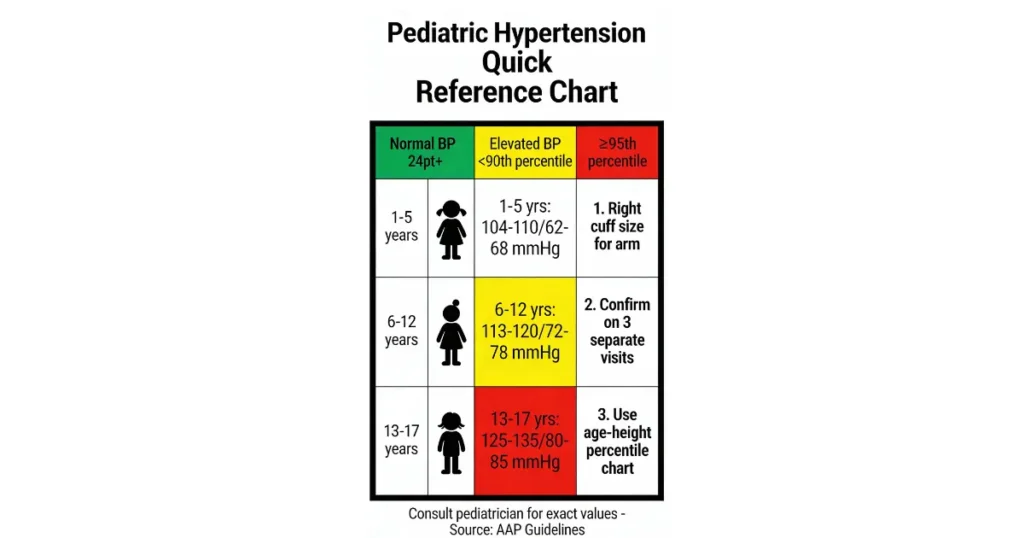
What Does a Pediatric Blood Pressure Chart Show?
A pediatric blood pressure chart usually contains:
- Rows for each age (for example 1–17 years).
- Columns for height percentiles (short, average, tall children).
- BP values at the 50th, 90th, 95th and 99th percentiles.
For children aged 1–12 years, BP below the 90th percentile on the pediatric blood pressure chart is considered normal, while 90th–95th percentile is labelled “elevated BP”, and above the 95th percentile is hypertension. For teenagers 13 years and above, many guidelines use adult‑style cut‑offs such as 120/80 mmHg for normal and 130/80 mmHg as a threshold for hypertension in young people.
For quick reference in clinics and health camps, some Indian resources provide simplified numbers instead of the full pediatric blood pressure chart, such as:
- 1–5 years: around 95/60 to 100/65 mmHg.
- 6–13 years: around 97/62 to 104/69 mmHg.
- 14–17 years: around 104/65 to 117/77 mmHg.
These are only rough guides and do not replace a detailed pediatric blood pressure chart, but they help parents understand whether a reading looks very high or very low.
Read More: CDC Stops Recommending Hepatitis B Vaccines: What Does This Mean For India?
Evaluation Of Hypertension in Children and Young Adults
When a child or young adult has high readings, the evaluation of hypertension in children and youth happens step by step. The aim is to confirm that hypertension is real and persistent, look for causes of hypertension in children or young adults, and assess for early organ damage.
Step 1: Confirming the reading
The first part of evaluation of hypertension in children is about correct measurement.
- Use the right cuff size for the child’s arm; a cuff that is too small can falsely raise the reading.
- Take at least two or three readings after the child rests for 5 minutes, and preferably on more than one visit.
- Compare values with a pediatric blood pressure chart to decide whether it is truly high.
For young adults, doctors often repeat BP on different days and may use 24‑hour ambulatory BP monitoring to confirm hypertension and rule out “white coat” effect.
Step 2: Looking for causes and risk factors
The next part of evaluation of hypertension in children is identifying the causes of hypertension in children and any signs of kidney or heart problems.
- History and examination: birth history, urinary infections, growth, family history, sleep problems, obesity, medicines or steroid use.
- Basic tests: urine analysis, kidney function tests, ultrasound of kidneys and abdomen, echocardiography if needed.
- Special tests for renovascular hypertension in children or hormonal causes if suspected.
For young adults, evaluation includes checking cholesterol, blood sugar, BMI, lifestyle habits and sometimes tests for secondary causes if the BP is very high or appears at a very young age.
“Always ask ‘why’ when a child has high BP; the answer is often in the kidneys, heart or lifestyle.”

Treatment And Lifestyle Tips for Hypertension in the Young
Once hypertension is confirmed, management combines lifestyle change and, when needed, medicines. Early control reduces long‑term risk of heart disease, stroke and kidney failure.
Lifestyle measures
Key lifestyle steps for both causes of hypertension in children and reasons for high BP in young age include:
- Reducing salt by cutting down on pickles, papads, packaged snacks and instant noodles.
- Encouraging at least 40–60 minutes of outdoor play or physical activity daily in children and 150 minutes of moderate exercise per week in young adults.
- Maintaining healthy weight through balanced home‑cooked food rich in fruits, vegetables and whole grains.
- Limiting screen time, improving sleep routine and learning simple stress‑management methods.
- Avoiding smoking, alcohol and unnecessary gym supplements or steroids.
These steps help in both preventing and treating hypertension and can lessen the need for long‑term medicines in some children and young adults.
Medicines and follow‑up
When lifestyle alone is not enough, doctors may start medicines after proper evaluation of hypertension in children or young adults.
- Drug choice depends on age, cause of hypertension, kidney function and other illnesses.
- In renovascular hypertension in children, procedures like angioplasty or surgery may be needed along with medicines.
- Regular follow‑up with BP checks, growth monitoring and adjustment of dose is very important in children and adolescents.
When should parents or youth worry?
If you or your child has any of these, it is sensible to talk to a doctor about hypertension:
- Repeated BP readings above normal or above the values on a pediatric blood pressure chart.
- Severe headache, visual blurring, nosebleeds or seizures in a child.
- Very high readings in a young adult, especially with chest pain, breathlessness or swelling of feet.
Warning signs to look out for:
- Persistent symptoms like fatigue, dizziness, or abdominal pain alongside elevated BP warrant immediate evaluation, as they may signal underlying issues such as kidney disease or coarctation of the aorta in children.
- Family history of hypertension, obesity (BMI >95th percentile), or conditions like diabetes further raise concern, prompting earlier screening.
A simple question to ask yourself is: “When was the last time my child’s BP was checked?” Many national surveys show that more than 40% of adolescents and young adults have never been screened, even though hypertension among young people are rising.
On A Final Note…
Hypertension in children demands early attention in India, where rising cases among children and youth signal a need for regular checks using a pediatric blood pressure chart.
Addressing causes of hypertension in children, reasons for high BP in young age, and renovascular hypertension in children through lifestyle shifts and timely evaluation of hypertension in children can prevent lifelong complications.
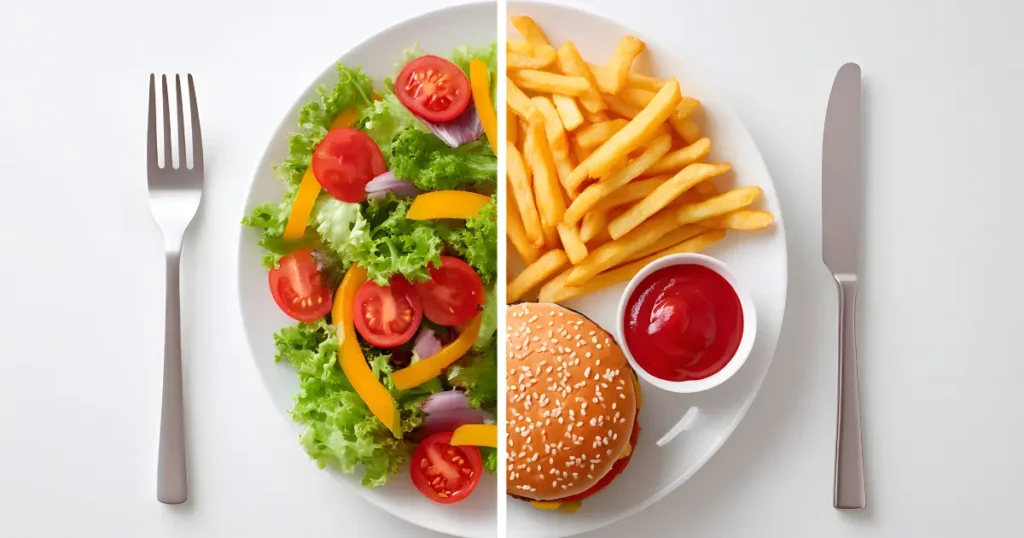
Start today: cut salt, add playtime, and track BP readings. Young hearts stay strong when families act now – schedule that check-up!
FAQs
1. What causes hypertension in young people in India?
Common causes of hypertension in children include kidney issues and renovascular hypertension in children. Reasons for high BP in young age often link to obesity, salt and stress.
2. What are main causes of hypertension in children?
Kidney diseases, renovascular hypertension in children and heart defects top the list. Lifestyle factors like obesity add to causes of hypertension in children in teens.
3. Why high BP in young age (20s-30s)?
Reasons for high BP in young age: excess salt, no exercise, smoking and family history. Check evaluation of hypertension in children if symptoms start early.
4. How to use pediatric blood pressure chart?
Match child’s age, height and BP on pediatric blood pressure chart. Above 95th percentile signals hypertension in young people and children.
5. What is evaluation of hypertension in children?
Confirm BP, check kidneys via ultrasound, use pediatric blood pressure chart. Test for renovascular hypertension in children if severe.
6. Can hypertension in young people get reversed?
Yes, via diet, exercise for lifestyle reasons for high BP in young age. Medicines help renovascular hypertension in children.
7. When to check BP in kids and youth?
Yearly for all; more if overweight or family history. Use pediatric blood pressure chart at clinics.
