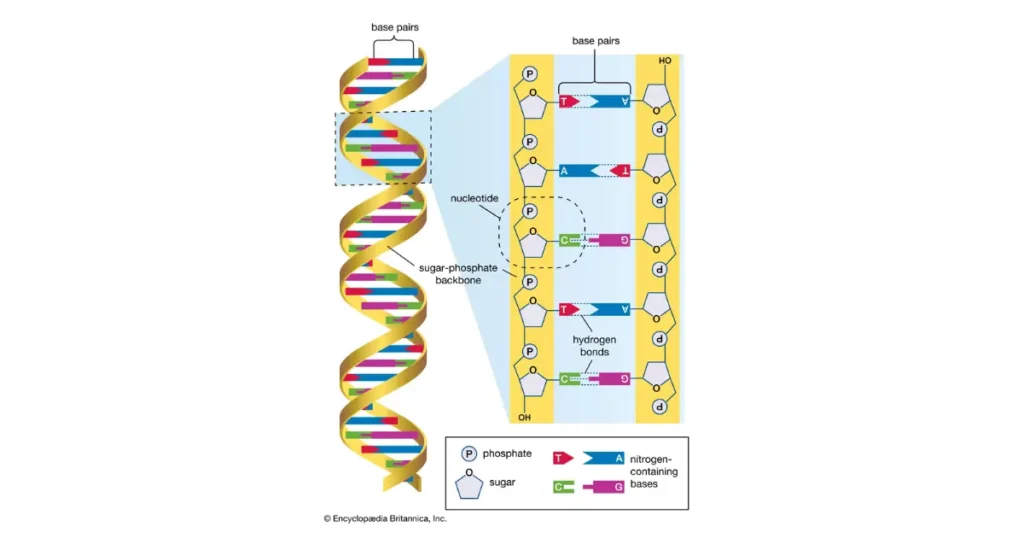
Imagine unlocking the complete instruction manual for building and running a human body, all three billion letters of DNA code. What is the human genome project? It is that bold effort, a global science adventure from 1990 to 2003, where teams mapped every base pair in human DNA to reveal our genetic blueprint.
This project did not just list genes; it opened doors to better medicines and disease understanding. Have you ever wondered why some people face certain illnesses while others stay healthy? The answers often hide in this DNA map – the Human Genome Project!
What is the Human Genome Project?
The Human Genome Project stands as a landmark in biology that mapped the entire DNA sequence of humans. It ran from 1990 to 2003 and involved scientists from multiple countries working together to read the three billion base pairs in human DNA.
Goals of Human Genome Project
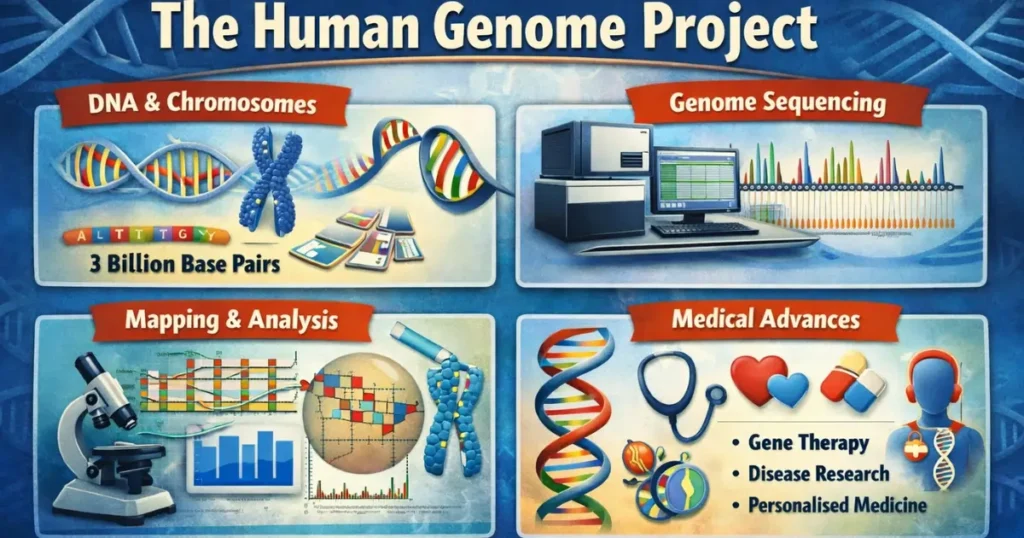
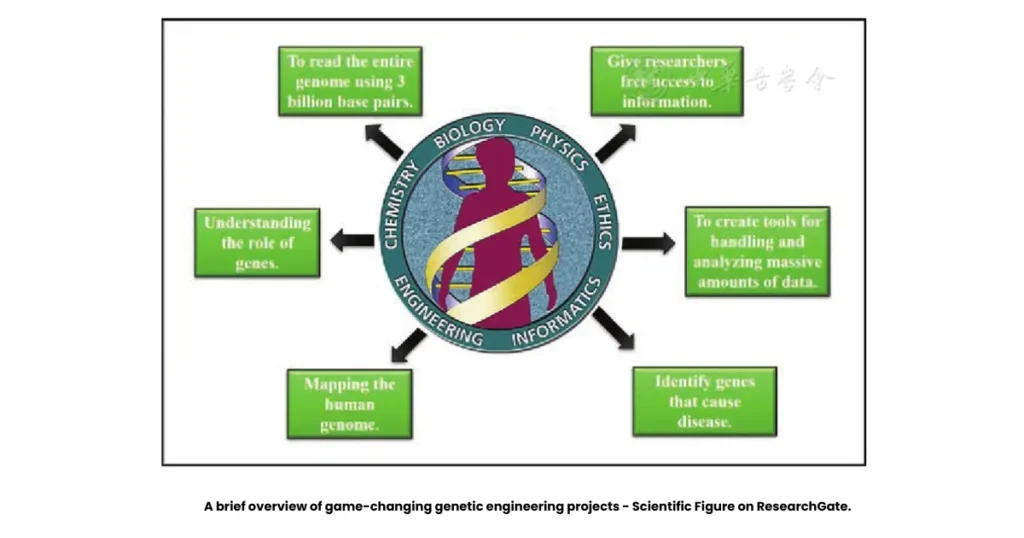
The goals of the human genome project focused on clear targets. The main push was to sequence the full three billion base pairs of human DNA. Next came finding all human genes, around 20,000 to 25,000 in total and placing them on the right chromosomes.
What was the aim of the human genome project in practical terms? Leaders wanted public databases for all data, better DNA tools, and study of ethics around gene info. “We aimed to create a reference sequence for the human genome,” said project planners, as noted in official records. Other goals covered model organism genomes like mouse DNA for comparisons.
History of Human Genome Project
The idea took shape in the 1980s. The US Department of Energy funded early steps in 1986, then the National Institutes of Health joined in 1990 with a 15-year timeline. It finished in 2003, ahead of schedule.
- 1990: Project launches with international partners.
- 1998: Celera Genomics enters as a rival, speeding things up.
- 2000: First draft shared by US President Bill Clinton and UK Prime Minister Tony Blair.
- 2003: 99% complete, with high accuracy.
This race between public and private teams actually cut years off the plan.
Methodology of Human Genome Project
The methodology of human genome project used advanced techniques for its time. Scientists broke DNA into small fragments, sequenced them, and reassembled the pieces like a giant puzzle. They employed “hierarchical shotgun” sequencing: large chunks went into bacterial artificial chromosomes (BACs), then smaller bits got read.
The steps included the following:
- Genetic mapping with markers like RFLP.
- Physical mapping to link fragments to chromosomes.
- Sequencing via Sanger method, improved for scale.
Bioinformatics tools handled the data crunching. Have you wondered how they managed three billion letters? Computers aligned overlapping sequences from multiple donors.
Features of Human Genome Project
Several aspects make this project stand out in scientific history. Salient features of human genome project include its enormous scale, with 3.1 billion base pairs identified, yet only about 1.5% of that DNA actually codes for proteins. Humans possess roughly 22,300 genes, a number surprisingly lower than that found in rice plants.
Other standout points deserve attention. People share 99.9% of their DNA with each other, while differences arise from single nucleotide polymorphisms, or SNPs. The genome contains lots of repeat sequences, making up over 50% of the total. Project rules required free daily data release under the Bermuda Principles, and a global team from six countries collaborated closely.
Early analysis from the project noted clearly, “Segmental duplications cover more than 5% of the genome,” which surprised many researchers at the time.
Read More: Clinical SAS Programmer Jobs in India 2026: Salaries, Freshers Jobs Bangalore | LLRI
Human Genome Project Cost
The human genome project cost drew much attention. Initial estimates were at $3 billion over 15 years for the US share alone. Actual spending came to about $2.7 billion worldwide, under budget due to tech advances.
This covered sequencing, mapping, databases, and ethics studies, not just production. Costs dropped fast post-project; by 2015, sequencing a genome cost under $1,500.
Major Discoveries from the Human Genome Project
The results from the sequencing shocked many experts and reshaped fields of biology. Only 2% of human DNA makes proteins, while the rest plays roles in regulation or connects to evolutionary history. Humans share 98-99% of their genes with chimpanzees, highlighting close relations.
A quick list captures some key findings. The final gene count landed between 20,000 and 25,000. Exons, the coding parts, make up just 1.5% of the genome, while introns dominate the rest. Researchers identified 1.4 million SNPs as sources of variation. Even so-called “junk DNA” turned out to hold important functions.
These discoveries directly contributed towards later projects like ENCODE, which mapped functional elements across the genome.
Applications of Human Genome Project
Uses from the project appear in everyday life and medicine. Applications of human genome project support diagnosis of diseases such as cystic fibrosis or Huntington’s by pinpointing faulty genes. Doctors now match drugs to a patient’s genes, especially in cancer treatment, for better outcomes.
Everyday benefits extend further. Ancestry tests trace family roots using DNA patterns. Forensics experts identify people from tiny samples left at crime scenes. Farmers breed better livestock and crops with traits suited to local needs. Gene therapy offers ways to fix genetic faults directly.
The project reports state plainly, “Molecular medicine now predicts disease risks based on genome data.”
Benefits and Significance of Human Genome Project
Benefits of the human genome project extend far. It speeds personalized medicine, where treatments fit your DNA. Early detection of risks like breast cancer saves lives. The significance of human genome project lies in foundations laid. Genomics fields boomed, cutting sequencing costs a million-fold. Evolution studies clarified human origins.
A quote from Francis Collins, project head can attest to this: It provided “fundamental information about the human blueprint.” In India, it aids research on genetic disorders common here, boosting healthcare.
The project sparked ENCODE, cancer genome efforts, and more. Today, AI aids analysis. In healthcare education, it teaches gene roles, important for Indian students eyeing biotech careers.
Genomics continues to grow rapidly today as a direct result. Projects like cancer genome atlases, the 1000 Genomes Project, and AI-driven analysis tools all build on the HGP’s public data. In healthcare jobs across India, understanding this background helps professionals in clinical research and biotech roles advance their careers.
On A Final Note…
The Human Genome Project changed how we view human biology forever. From mapping three billion DNA base pairs to sparking fields like personalized medicine, its goals of human genome project delivered lasting value. Researchers in India now use this data for local health challenges, like genetic disorders in diverse populations.
What was the aim of the human genome project? Simple: to read our genetic code and share it freely. Salient features of human genome project, such as finding just 20,000-25,000 genes, surprised many and opened doors to new questions.
Applications of human genome project continue in drug design and gene therapy, while benefits of the human genome project lower disease risks worldwide. Even the methodology of human genome project, with tools like shotgun sequencing, paved the way for cheaper tests today, down from $2.7 billion total human genome project cost.
For those in healthcare or research, understanding what is basic medical writing helps explain these advances clearly. It involves writing simple reports on topics like genomes for doctors or the public, much like this blog. Start applying these insights in your work or studies today.
FAQs
How long did the Human Genome Project take?
It ran from 1990 to 2003, finishing two years early.
Who led the Human Genome Project?
Francis Collins directed the public effort; J. Craig Venter headed Celera Genomics.
Is the human genome fully mapped now?
The 2003 version covered 92%; a full version came in 2022.
How does Human Genome Project help medicine?
It enables gene-based diagnosis, targeted drugs, and ancestry tests.
What is a human genome project diagram?
It shows DNA fragmentation, sequencing, and reassembly steps, often as timelines or flowcharts.
